PhD Candidate · Cornell University
Shaden Shaar
I am a PhD candidate at Cornell University, advised by Prof. Claire Cardie, working on Long-Form Input Understanding across Vision-and-Language Tasks. I have worked across several domains and modalities: document-level event extraction in text (TACL 2025), and open-ended question answering over movie recaps with MovieRecapsQA (CVPR 2026) and now over full-length films. During my PhD, I have also collaborated with NewYork-Presbyterian Hospital on cardiology NLP projects, including an LLM-based analysis of UNOS exception requests (JHLT 2026).
Before Cornell, I spent two years as a research assistant at the Qatar Computing Research Institute working on fact-checking and propaganda detection across modalities. I did my undergrad in Computer Science at Carnegie Mellon University.

News
-
Visiting the Berkeley NLP group this semester, working with Dr. Sewon Min.
-
MovieRecapsQA, our open-ended benchmark for question-answering over full-length movies, appeared at CVPR 2026.
-
Our JHLT paper with NewYork-Presbyterian uses an LLM for thematic analysis of accepted heart-transplant exception requests.
-
Wrapped up a summer as an Applied Scientist Intern at Zillow, building conversational real-estate agents with reinforcement learning.
-
"Are Triggers Needed for Document-Level Event Extraction?" was published in TACL. Also finished an ML research engineering internship at Scale AI.
Experience
-
Applied Scientist Intern · Zillow Group
Remote, USA
- Built a home-purchase co-pilot for Zillow: a multi-turn assistant that answers buyer questions, tracks purchase intent as it accumulates over a conversation, and narrows a large listing inventory toward properties that fit.
- Post-trained the dialogue policy on long multi-turn conversation data, running DPO over preference pairs scored on whole dialogues, then GRPO with a trajectory-level reward so credit lands on the conversation rather than the individual turn.
- Built the reward-modeling and evaluation pipeline behind that training, including rollout generation and conversation-level scoring for grounded property-search dialogue.
-
Machine Learning Research Engineer Intern · ScaleAI, Inc.
New York City, NY, USA
- Built the judge co-pilot for the Qatari judicial department: a set of case-analysis services, each exposed as an API, deployed together as a judge-facing dashboard.
- Designed the Arabic information-extraction pipeline, running OCR over scanned filings, then event extraction that links each extracted event to the evidence spans supporting it in the case document, feeding a case summarizer built on that structure.
- Built precedent lookup as a RAG system over constitutional bylaws and prior Qatari Supreme Court cassation rulings, combining dense embedding retrieval with sparse lexical matching and reranking the merged candidate set.
-
AI/ML Research Intern · Apple
Seattle, WA, USA
- Built a conditional synthetic dialogue generator for Siri training with Dr. Alex Churchill, producing multi-turn conversation data for scenarios with little or no real usage data to draw on.
- Simulated user behaviour to generate the human side of each conversation, so the pipeline produced complete multi-turn dialogues rather than isolated utterances.
- Conditioned generation on intent and user behaviour, letting a target dataset be specified to arbitrary requirements rather than freely sampled, and ran zero-shot without seed dialogues for the target scenarios.
-
Research Assistant · Qatar Computing Research Institute
Doha, Qatar
- Automated fact-checking: introduced the task of detecting previously fact-checked claims, matching an incoming claim against a database of prior verdicts so a checker could reuse existing work instead of starting over. Follow-up work extended it to document-level matching and to the role of surrounding context, with papers at ACL, EMNLP, RANLP, and IJCAI.
- Propaganda and persuasion detection: built Prta, a public system that flags propaganda techniques in news articles (ACL 2020 Best Demo, Honorable Mention), then extended the work to multimodal memes where the technique is split across text and image, published at ACL and SemEval.
- COVID-19 misinformation: built pipelines for factuality, harmfulness, and framing of pandemic claims across multiple languages and social platforms, with papers at ICWSM, EMNLP, NAACL, and COLING.
- Emotion detection: cross-lingual classification for low-resource languages with little annotated data (LREC).
- Co-organized shared tasks at SemEval, CLEF CheckThat!, and ACL workshops, releasing the datasets and evaluation setups these problems are still benchmarked on. Several of the news-facing systems were taken up by news agencies and fact-checking organizations.
Selected publications
All 32 publications →A few representative papers. The full list is on the publications page and Google Scholar.
-
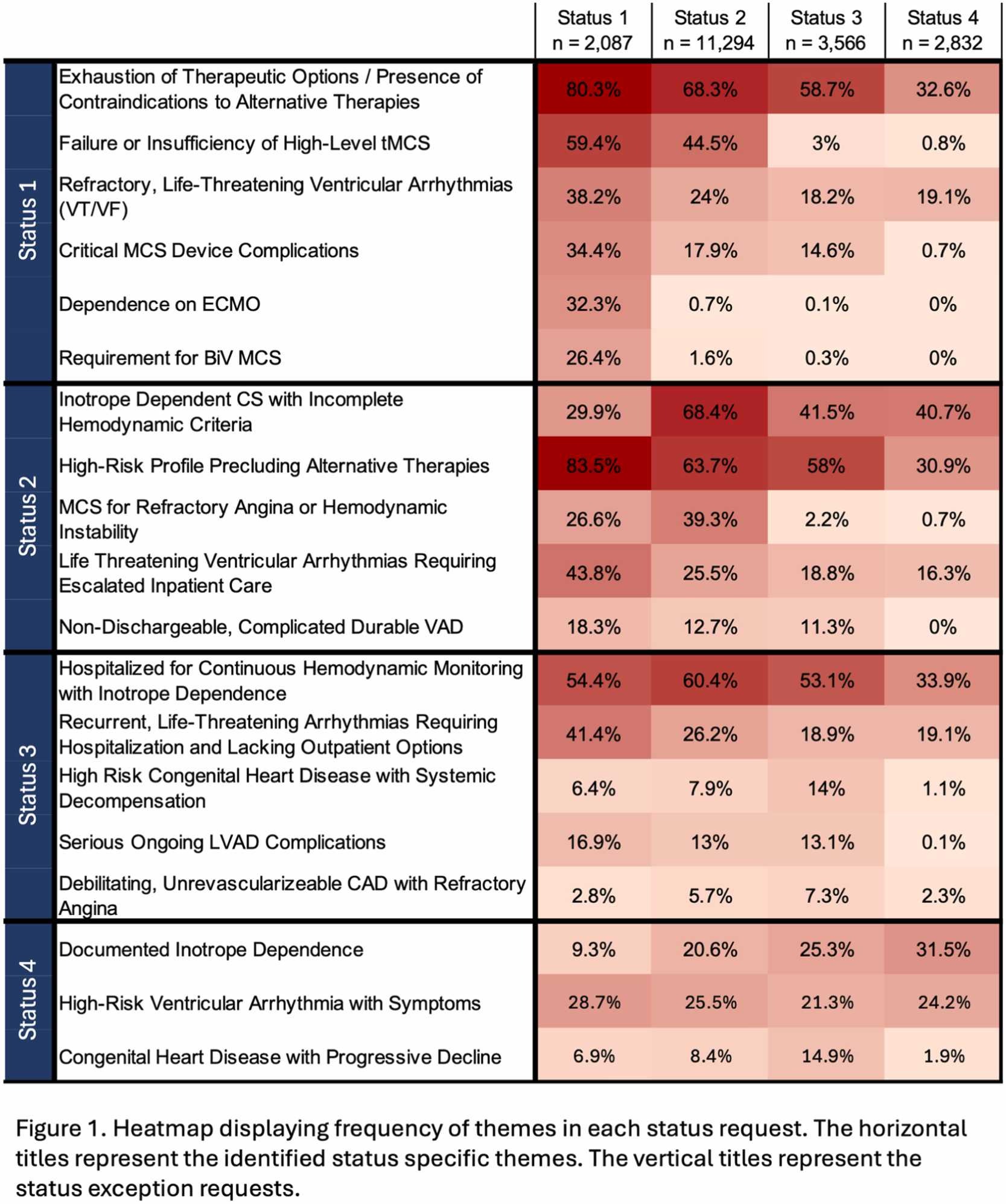 Thematic Analysis of Accepted Exception Requests for Heart Transplant Candidates Using a Large Language Model
J. Frye, Shaden Shaar, C. Cardie, E. DeFilippis, D. Estrin, G. Sayer, N. Uriel, et al.
Uses an LLM to perform thematic analysis of accepted exception requests for heart transplant candidates, surfacing the clinical rationales that drive decisions in a setting where manual review at scale is infeasible.
-
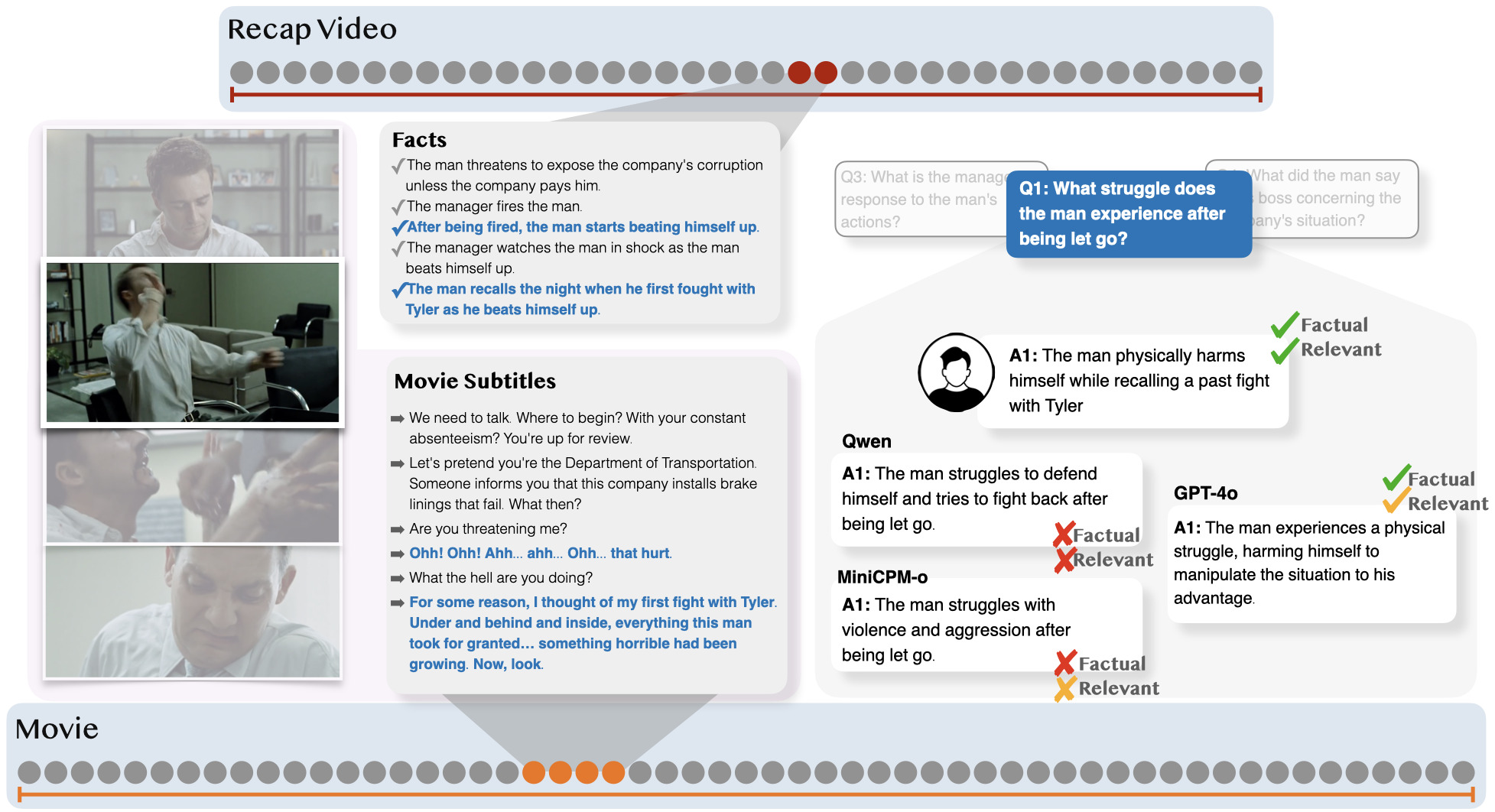 MovieRecapsQA: A Multimodal Open-Ended Video Question-Answering Benchmark
Shaden Shaar, B. Thymes, S. Chaixanien, C. Cardie, B. Hariharan
An open-ended video-QA benchmark built from movie recaps that stress-tests whether models can reason over long-form narrative, not just short clips. Paired with baselines that expose a large gap between human and model performance on grounded, cross-modal questions.
-
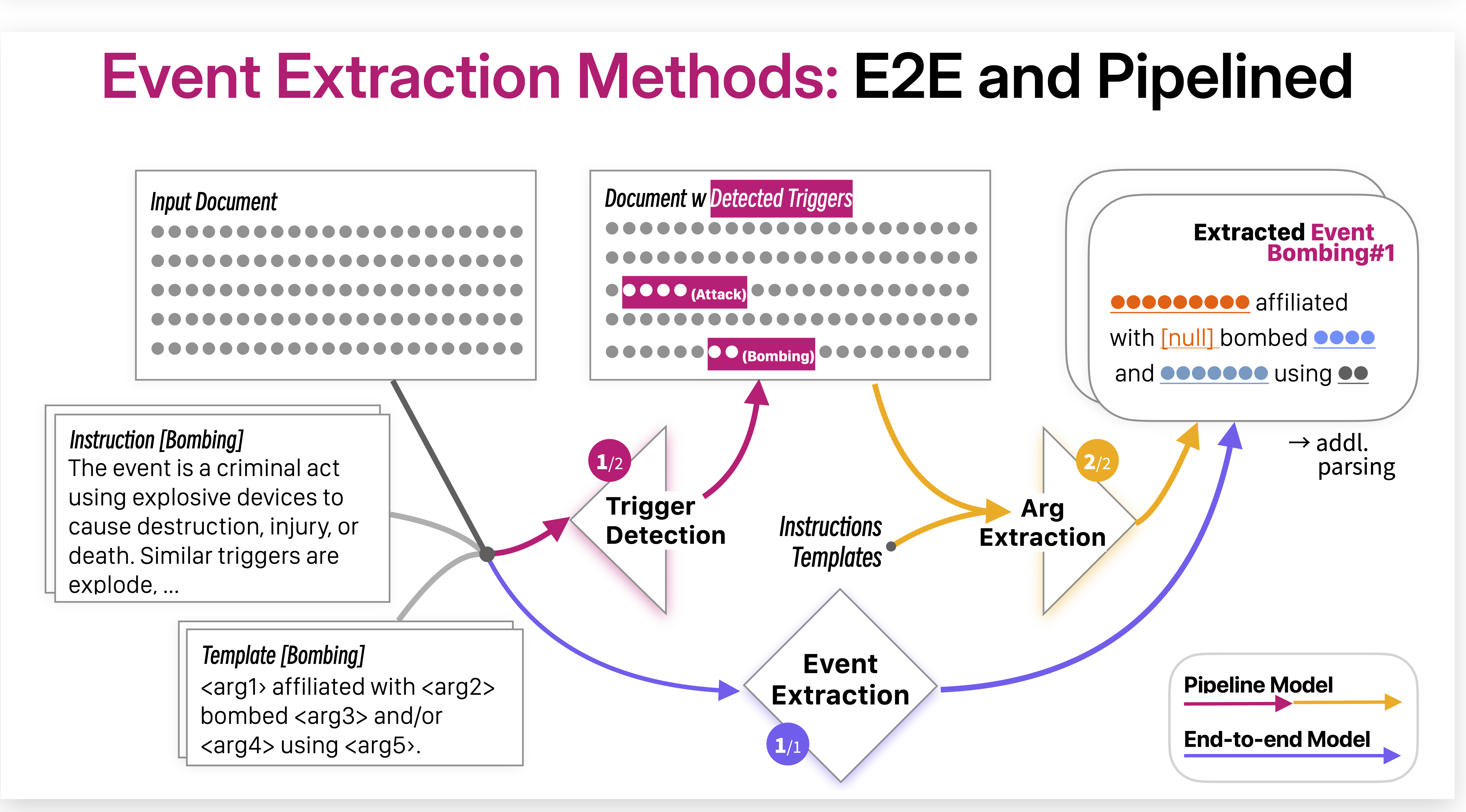 Are Triggers Needed for Document-Level Event Extraction?
Shaden Shaar, W. Chen, M. Chatterjee, B. Wang, W. Zhao, C. Cardie
Revisits a long-standing assumption in event extraction — that explicit trigger annotations are required — and shows that trigger-free formulations can match or exceed trigger-based pipelines at the document level.
-
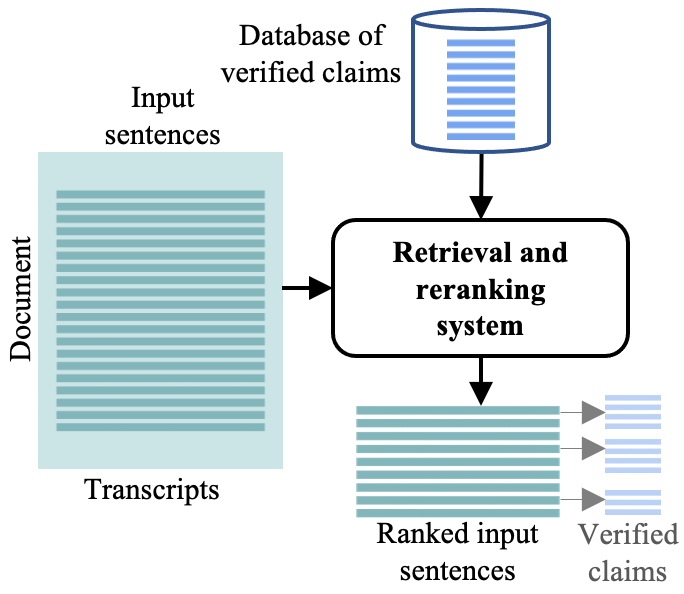 Assisting the Human Fact-Checkers: Detecting All Previously Fact-Checked Claims in a Document
Shaden Shaar, N. Georgiev, F. Alam, G. Da San Martino, A. Mohamed, P. Nakov
Scales fact-checked-claim detection from isolated sentences to full documents, where each claim must be located and matched jointly. Introduces a document-level dataset and retrieval+ranking system tuned for real fact-checker workflows.
-
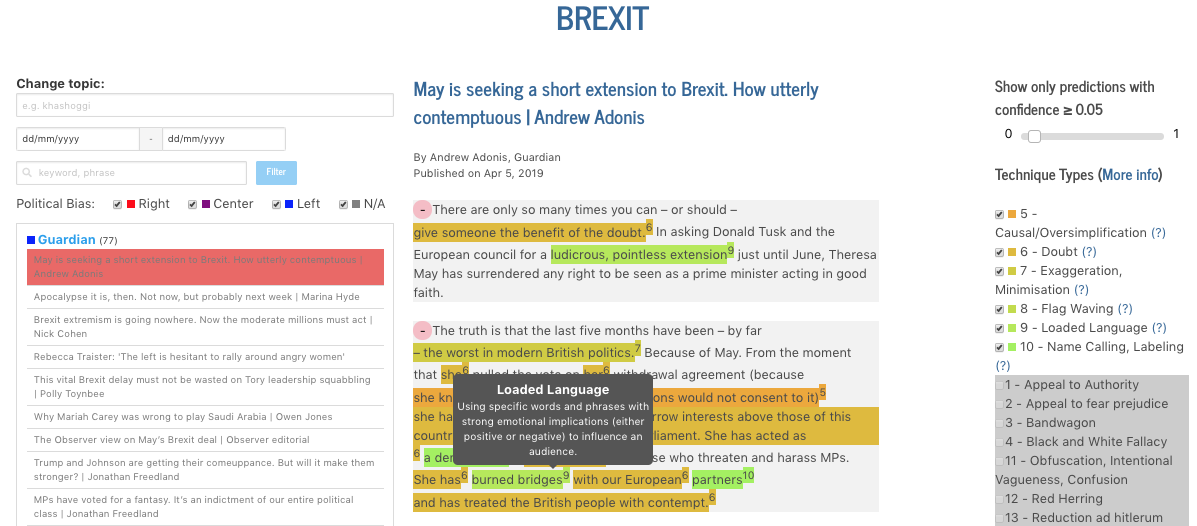
Best Demo Award, Honorable Mention
Prta: A System to Support the Analysis of Propaganda Techniques in the NewsG. Da San Martino, Shaden Shaar, Y. Zhang, S. Yu, A. Barrón-Cedeño, P. Nakov
An end-to-end system for highlighting 18 propaganda techniques in news articles, paired with a public web interface. Recognized with an Honorable Mention for Best Demo at ACL 2020.
-
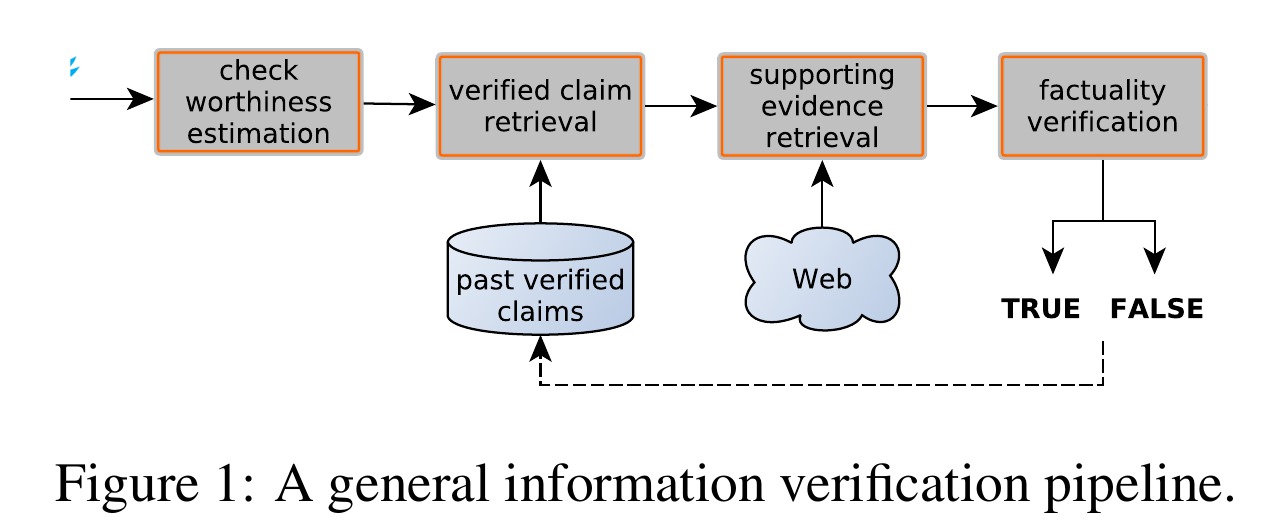 That Is a Known Lie: Detecting Previously Fact-Checked Claims
Shaden Shaar, G. Da San Martino, N. Babulkov, P. Nakov
Formalizes "previously fact-checked claim detection" as a ranking task and releases the first dataset for it, showing that reusing existing fact-checks is a practical alternative to verifying every claim from scratch.
Education
-
PhD in Computer Science
Cornell University · Ithaca, NY
Advised by Prof. Claire Cardie · Minor in Applied Mathematics · Graduating Jan 2027
University Fellowship (2021)
-
MS in Computer Science
Cornell University · Ithaca, NY
-
BS in Computer Science
Carnegie Mellon University · Doha, Qatar
Minor in Mathematics · College and University Honors
50% Academic Merit Scholarship (2015)
Contact
The best way to reach me is by email at ss2753 [at] cornell [dot] edu — whether about roles, collaborations, or anything related to the work. A printable CV is available as a PDF.